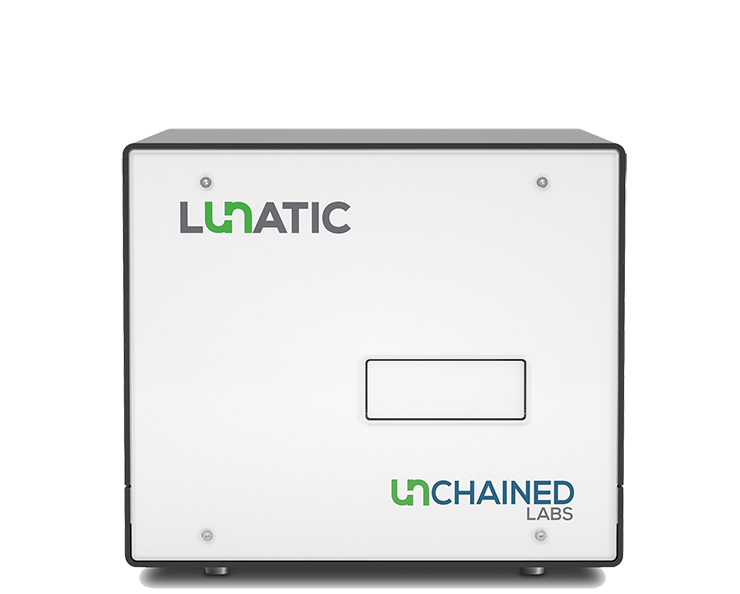




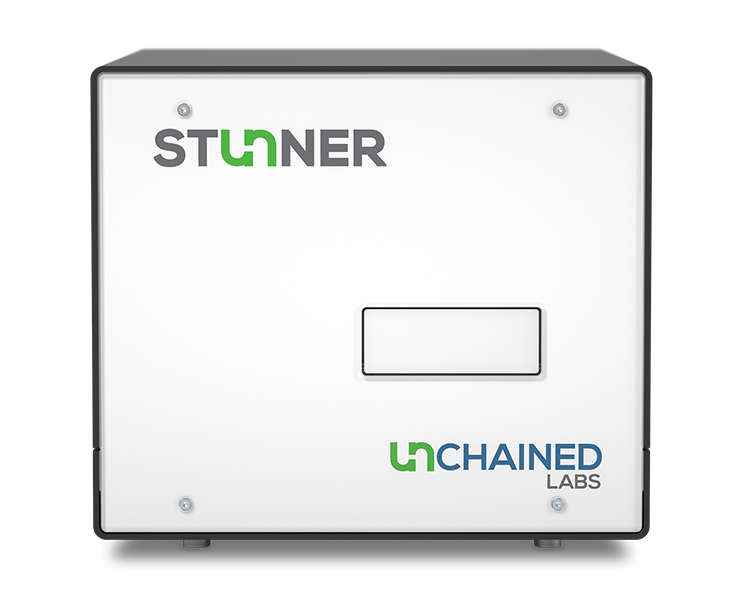
Stunner
The only plate-based dynamic light scattering & UV/Vis tool built for biologics
Brochures
Conquer protein characterization with DLS & UV/Vis
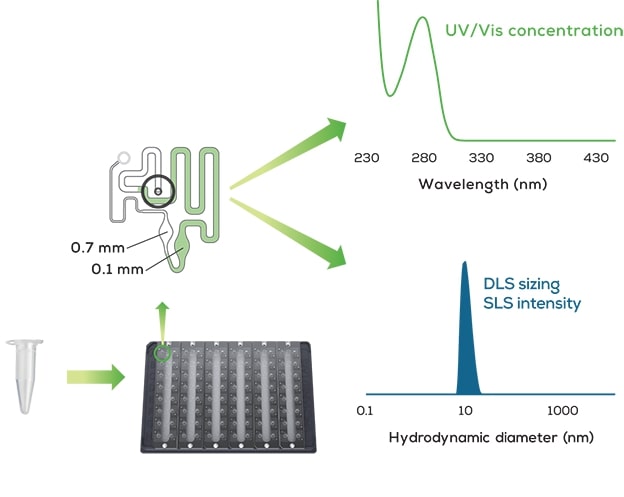
Stunner delivers plate-based, high-throughput dynamic light scattering (DLS) and UV/Vis absorbance data from 2 µL of sample for up to 96 samples. Read UV/Vis during the same runs as DLS to pair up quantification and sizing of proteins, ADCs, peptides – you name it.
• Size & polydispersity: See whether your protein’s diameter is what you expect and how uniform it is — critical for screening, formulation, and QC.
• Aggregate detection: Flag unwanted particles and samples that have gone south, so you can fix issues fast.
• Protein concentration: Get extremely accurate quantification based on sample absorbance across a huge range from 0.03-275 mg/mL – while also seeing when impurities are lurking.
• Conjugate characterization: Gain clarity on ADC samples with DAR characterization that is ideal for high-throughput optimization.
• B22 & kD: Get early insight into colloidal stability based on protein self-interactions, helping predict protein stability and the impact of different formulations.
Want a quote or a demo?
Videos
Ridiculously good data
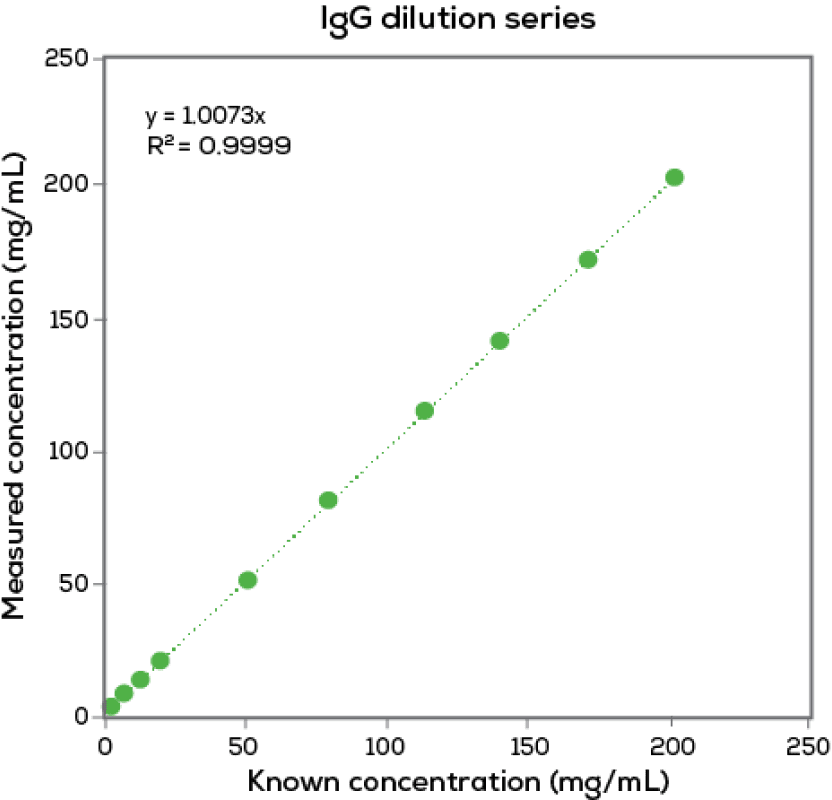
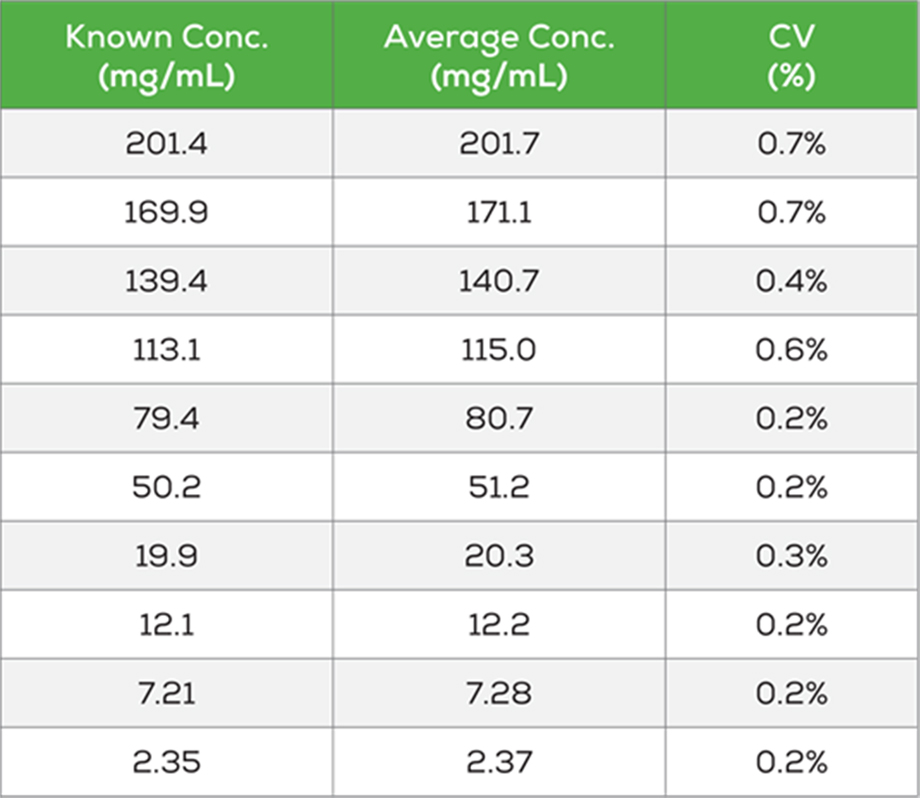
Get spot-on precision within 1% and accuracy within 2%. Using two fixed pathlengths, Stunner gets you jaw-dropping data at both low and high protein concentrations and nails the expected concentrations every time. With the smallest sample size, the highest throughput and crazy accurate results, Stunner is hands down the best tool out there for protein quantification.
Get the skinny on proteins
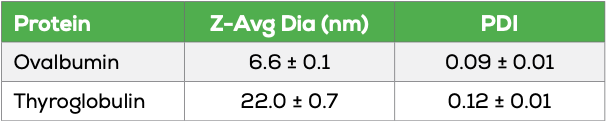
Stunner serves up spot-on light scattering data for proteins, so you can compare samples head-to-head based on size, intensity, mass and number. Measure the hydrodynamic size, grab polydispersity when you need to check uniformity, and watch your replicates stack up right on top of each other.


Track down the big boys
When it comes to the quick and easy detection of aggregates, Stunner pulls rank. See your monomer based on mass, then switch over to intensity to spot even the tiniest bit of aggregation. QC your protein at every step of your process and catch aggregation before it becomes a bigger problem.
Decode any ADC spectra
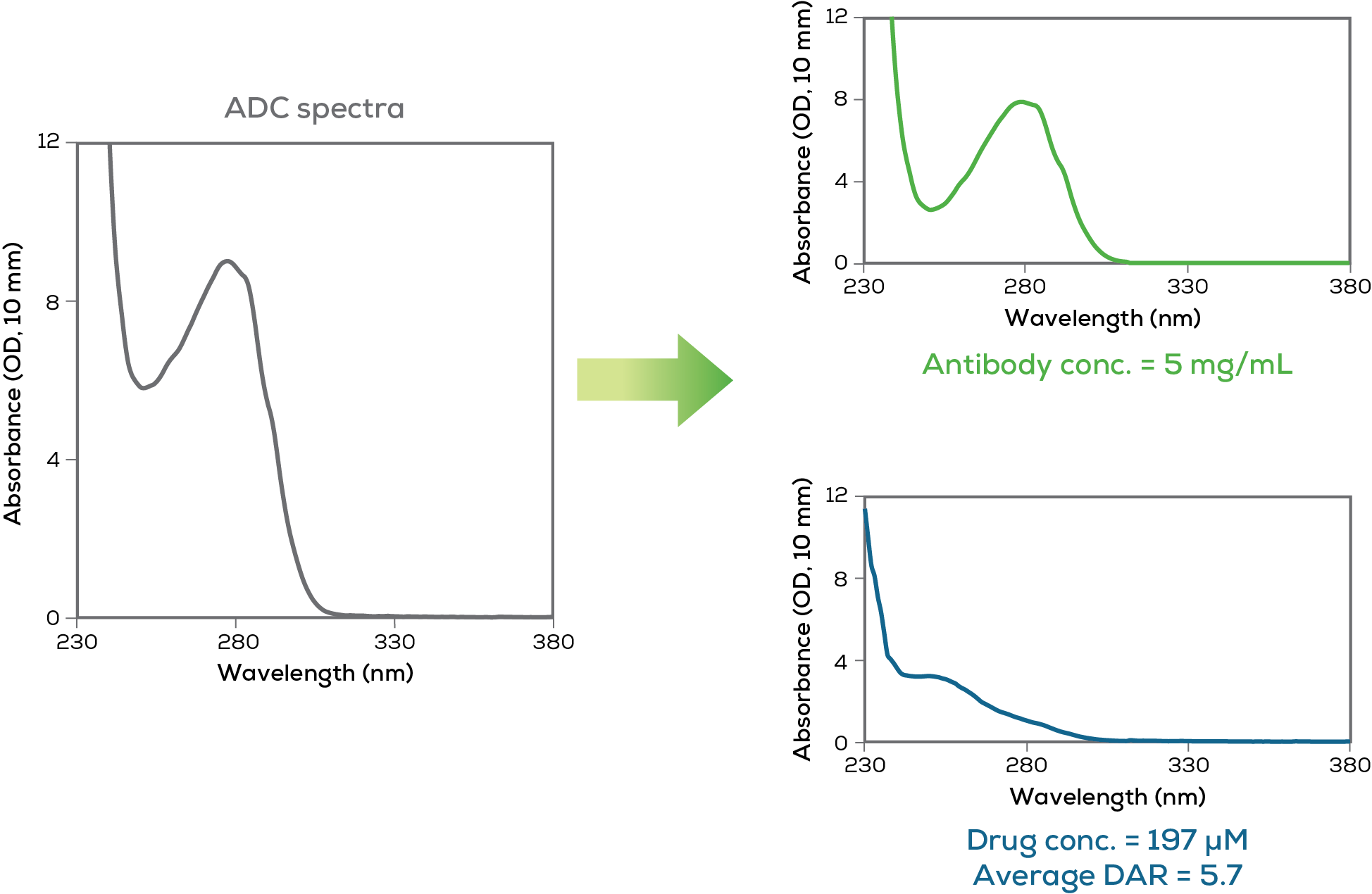
Measuring ADCs by UV/Vis gets tricky when drug spectra interfere in the UV range. Stunner’s Unmix separates ADC absorbance into the spectra from your antibody and from your drug or linker – even for overlapping spectra. Decode your ADC spectra automatically for a simple, high-throughput method to quantify antibody concentration, conjugate concentration and DAR.

Feel the attraction
Stopping aggregation in its tracks is critical. Stunner deals out B22 and kD, indicators of a potentially looming problem, in one simple experiment. All you do is create a quick dilutions series, load it on a plate and you’re good to go. Stunner checks the exact concentrations while light scattering figures out if your protein is attractive (negative slope) or repulsive (positive slope) to itself.
Know your AAV inside out
Get to the numbers you actually want — titers. Stunner bridges DLS and UV/Vis data to tally up how many full and empty capsids are present, and how much extra protein and DNA is left over. Take your cleaned up AAV and sneak a peek down to 1012 vg/mL. In just one assay, Stunner’s dye-free, label-free, standard-free, hassle-free workflow tells the whole titer story.

Tech
Learn more
Webinars
App Notes
Specifications
| Stunner instrument specifications (Biologics) | |
|---|---|
| Dimensions | 37 cm W x 58 cm D x 33 cm H; 29.3 kg |
| Electrical | Universal input voltage 100-240 V AC, 50-60 Hz |
| Computer | Separate computer with Windows 11 included |
| Connection | USB, TCP/IP (Service) |
| Approval | CE, FCC, CSA |
| Regulatory compliance | Optional 21CFRp11 software package USP and Ph. Eur. Performance verification standards |
| UV/Vis | ||
|---|---|---|
| Light source | Xenon flash lamp | |
| Detectors | UV/Vis polychromatic spectrophotometer | |
| Wavelength range | 230-750 nm | |
| Wavelength accuracy | ≤400 nm: ±1 nm; >400 nm: ±2 nm | |
| Spectral resolution | Better than 2 nm (toluene in hexane) | |
| Absorbance precision (1 cm quartz cuvette) | <1 OD: ±0.005 OD st dev | 1-2 OD: ±0.5% CV |
| Absorbance accuracy (1 cm quartz cuvette) | <1 OD: ±0.01 OD | 1-2 OD: ±1% |
| DLS and rotating angle DLS | |
|---|---|
| Light source | 2 x 660 nm laser diodes |
| Detection | Avalanche photodiode module |
| Number of angles | 1 (DLS), 5 – 30 (RADLS) |
| Angular range | 30-42° 110–162° |
| Size accuracy | ±2% |
| Minimum sample concentration | 0.1 mg/mL lysozyme |
| Hydrodynamic diameter range | 0.3–1000 nm |
| Molecular weight range | 1 kDa – 10 GDa |
| Particle concentration range | 109 – 5x10¹³ particles/mL (dependent on particle size, determined on 80 nm beads) |
| Stunner plate specifications | |
|---|---|
| Samples per plate | 96 (12 x 8 microplate format) |
| Sample retention time | Up to 2 hours |
| Recommended sample volume | 2 µL |
| Pathlength(s) | 0.1 mm & 0.7 mm path |
| Measurement time for full plate | ~10 minutes for UV/Vis only ~1 hour for UV/Vis and DLS (5 x 4s x 1 angle) ~2 h 15 min for UV/Vis and RADLS (5 x 1s x 7 angles) |
| Measurement range: OD 10 mm ng/µL dsDNA mg/mL ave protein mix | 0.03–275 OD 10 mm 1.5–13750 ng/µL 0.03–275 mg/mL |
| Absorbance precision (10 mm pathlength) | <1 OD: ±0.01 OD st dev 1-200 OD: ±1% CV |
| Absorbance accuracy (10 mm pathlength) | <1 OD: ±0.02 OD 1-200 OD: ±2% |